Crisp Fermented Cucumber Dill Pickles
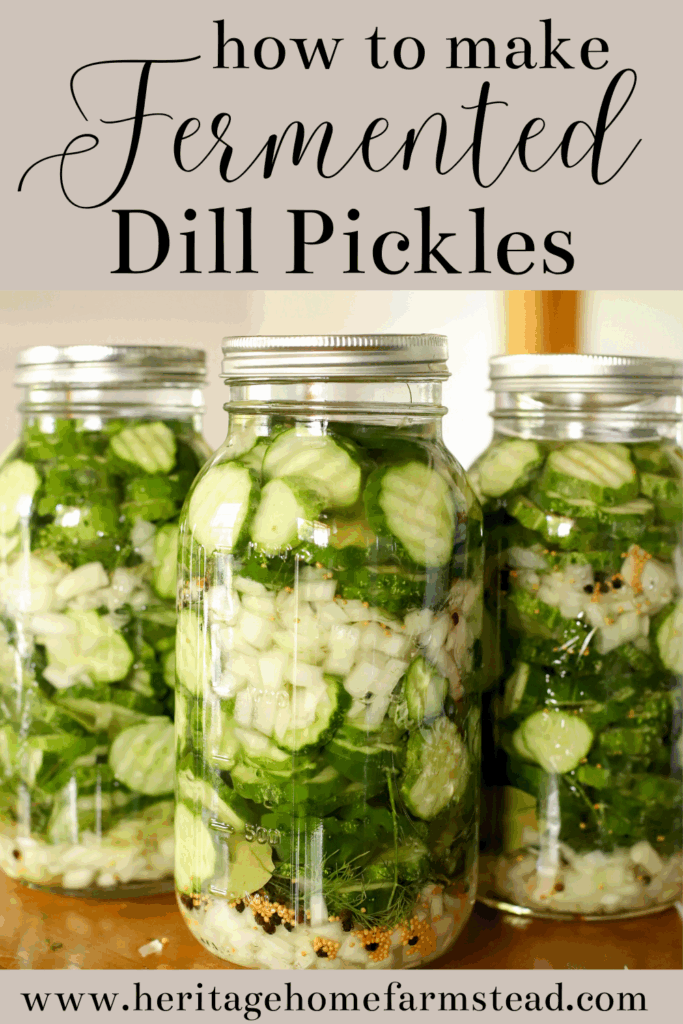
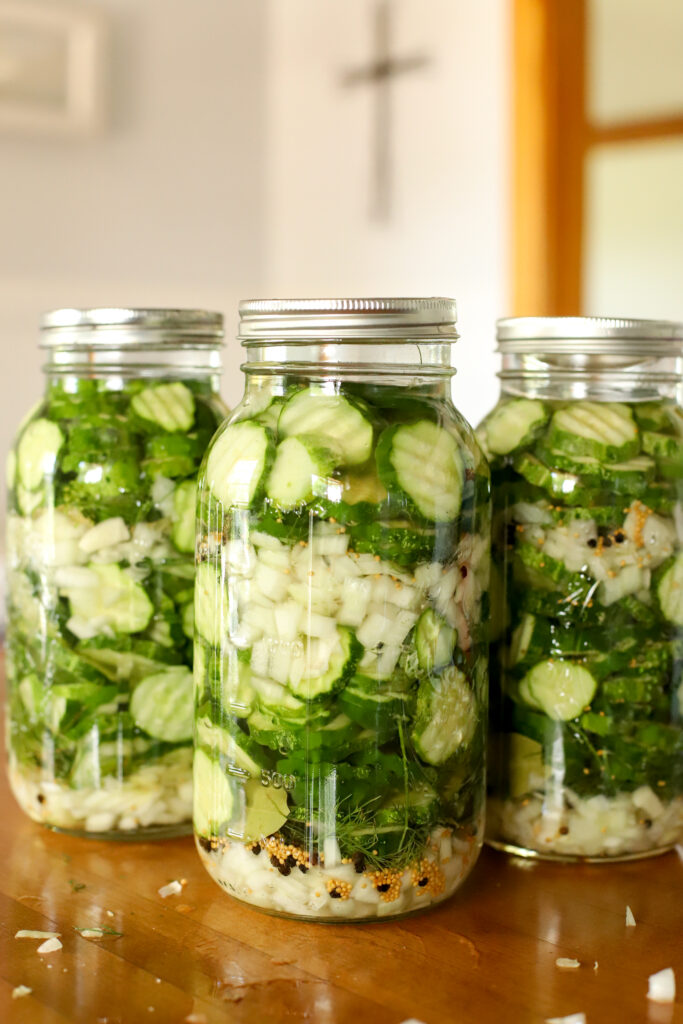
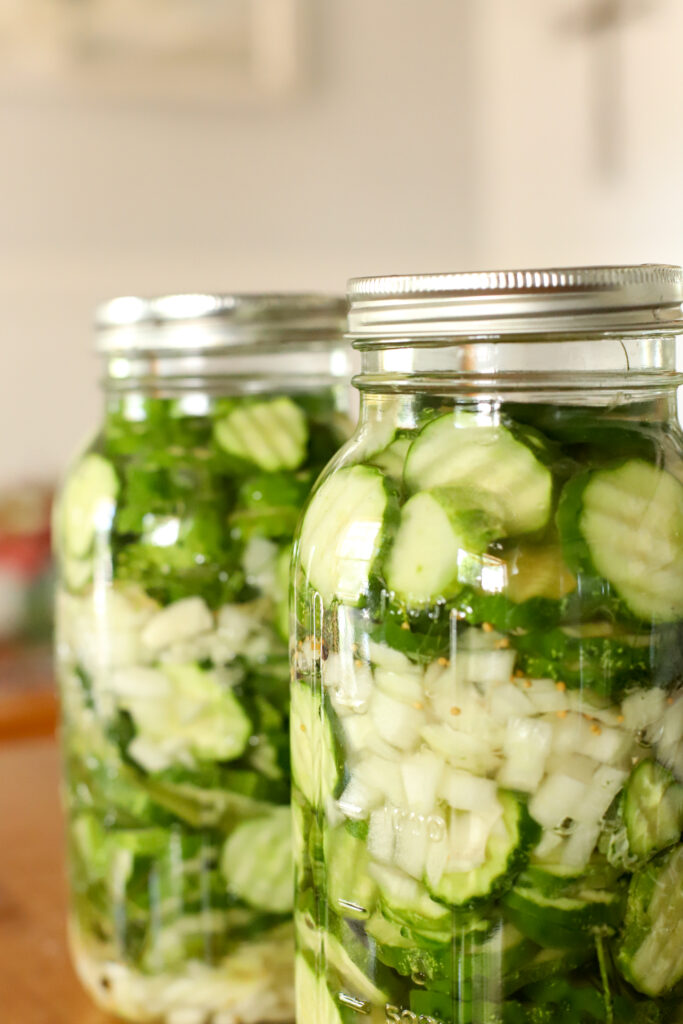
Making Crisp Fermented Cucumber Dill Pickles is far easier than you might think! With simple ingredients from the garden like fresh dill, garlic, onion, and cucumbers you can achieve a stellar crunch and the perfect pickle with gut benefiting fermentation every time.
Crisp Fermented Cucumber Dill Pickles
Making Crisp Fermented Cucumber Dill Pickles is far easier than you might think! With simple ingredients from the garden like fresh dill, garlic, onion, and cucumbers you can achieve a stellar crunch and the perfect pickle with gut benefiting fermentation every time.
Ingredients
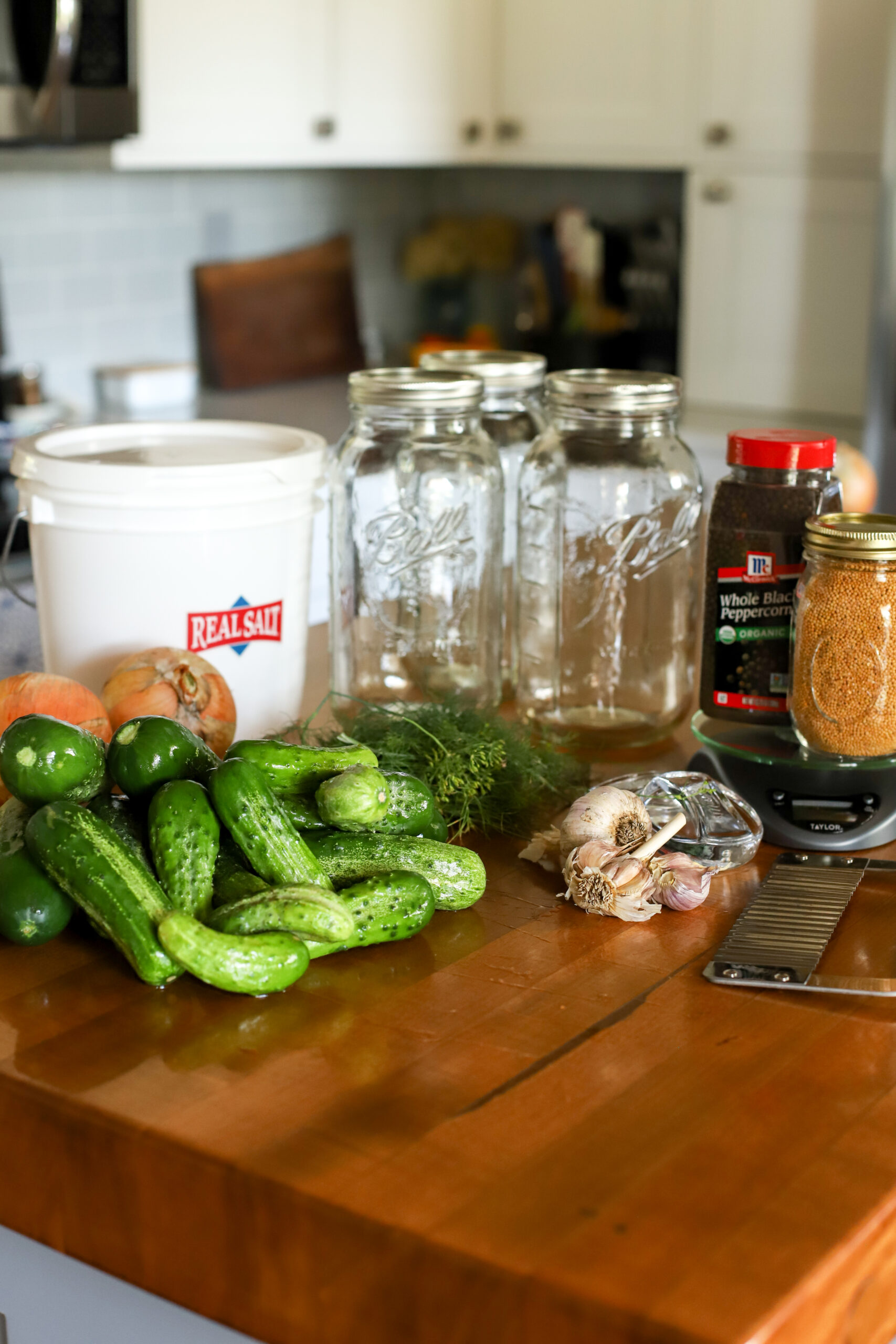
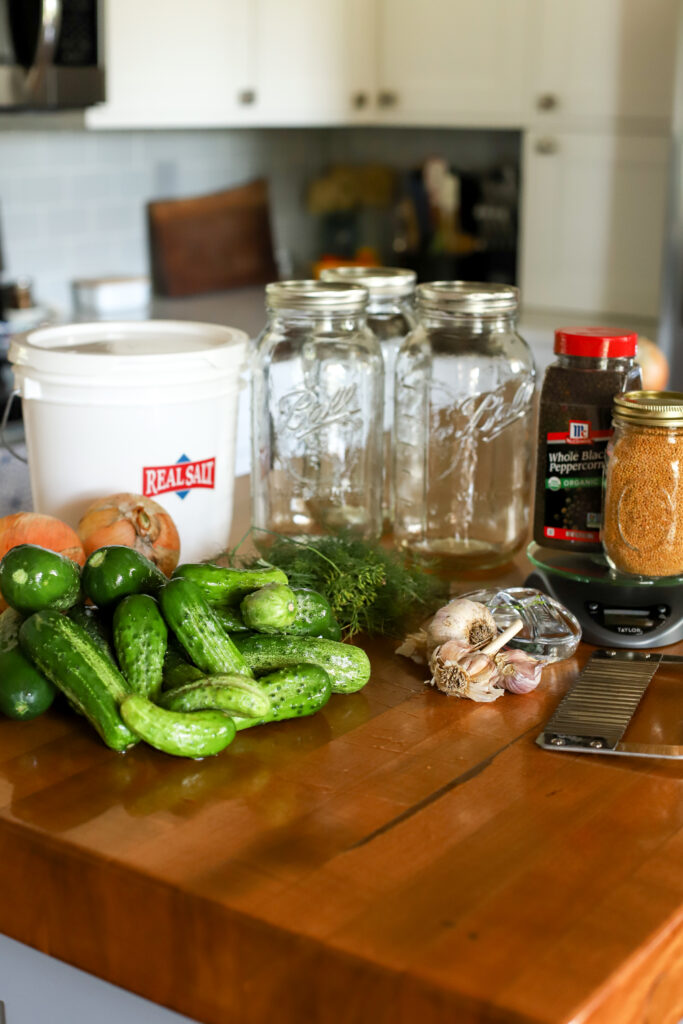
- 920 grams Cucumbers, crinkle cut
- 1 medium sized Sweet Onion, diced
- 4 cloves Garlic, halved
- 1 Tbsp Black Pepper Corns
- 2 tsp Yellow Mustard Seeds
- 2-3 Large Dried Bay Leaves
- 3/4 Cup Fresh Dill stems
- 640 grams Filtered Water
- 56 grams real Salt (I like Redmonds)
- 1 Half Gallon Mason Jar
- 1 Fermentation Weight
Instructions
- Thoroughly clean all knives, cutting boards, jars, lids, and weights with very hot water and soap.
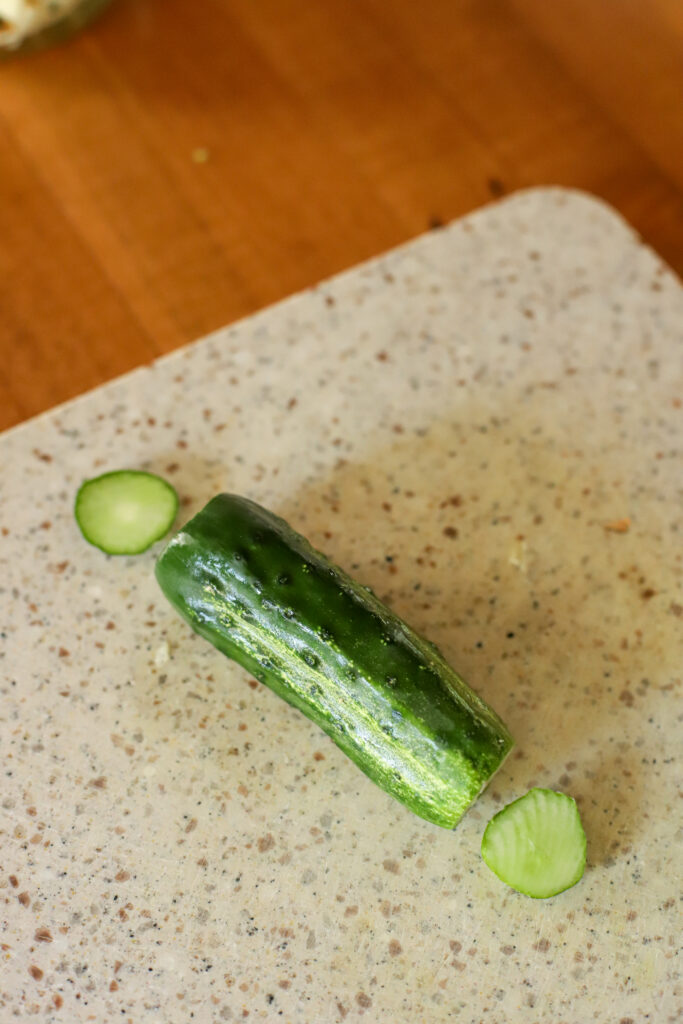
- Gather all ingredients. Prepare cucumbers by washing them and cutting the ends off. Cutting both ends off is a very crucial step. Leaving the end on can cause the pickles to turn slimey because of the enzymes released from the stem.
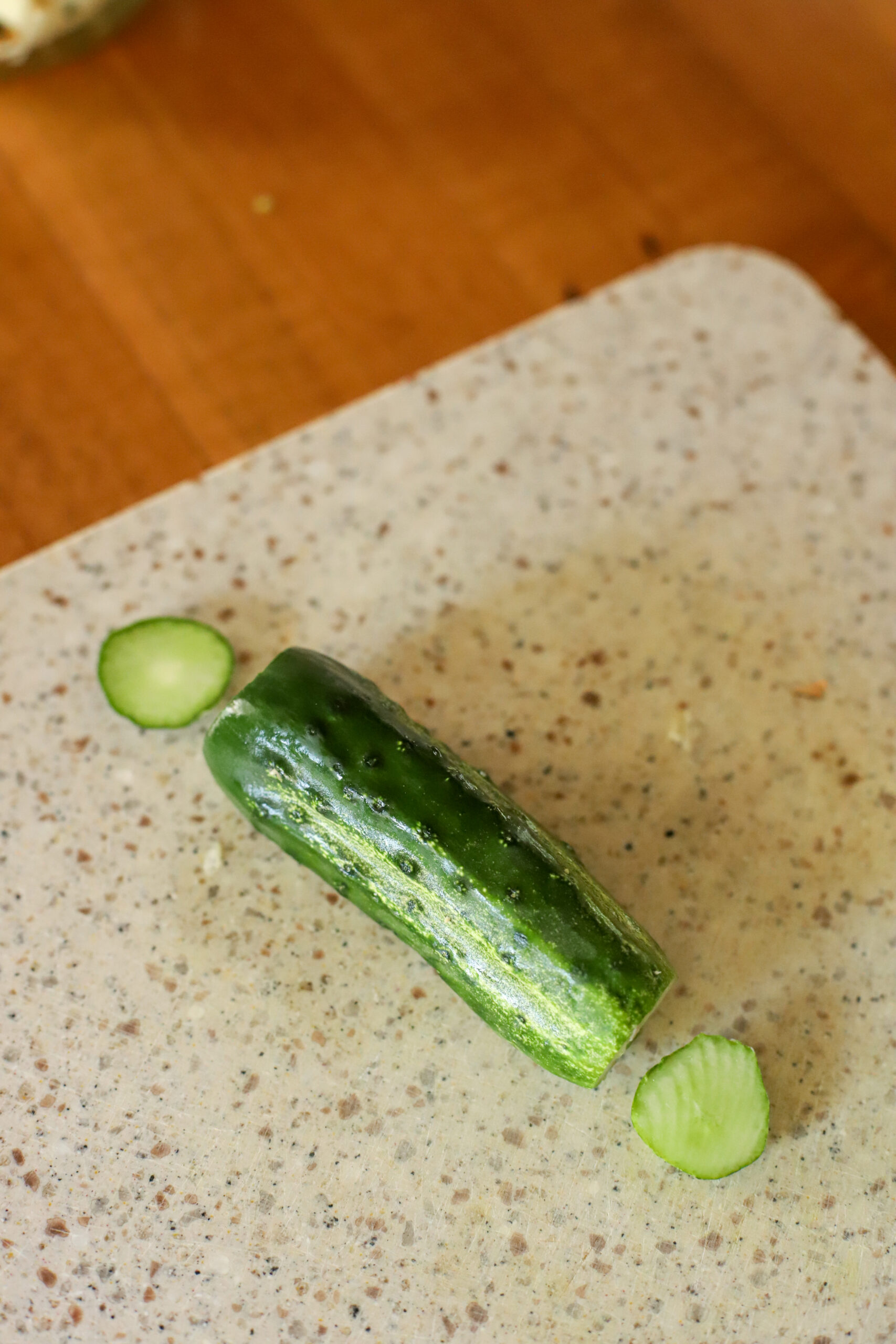
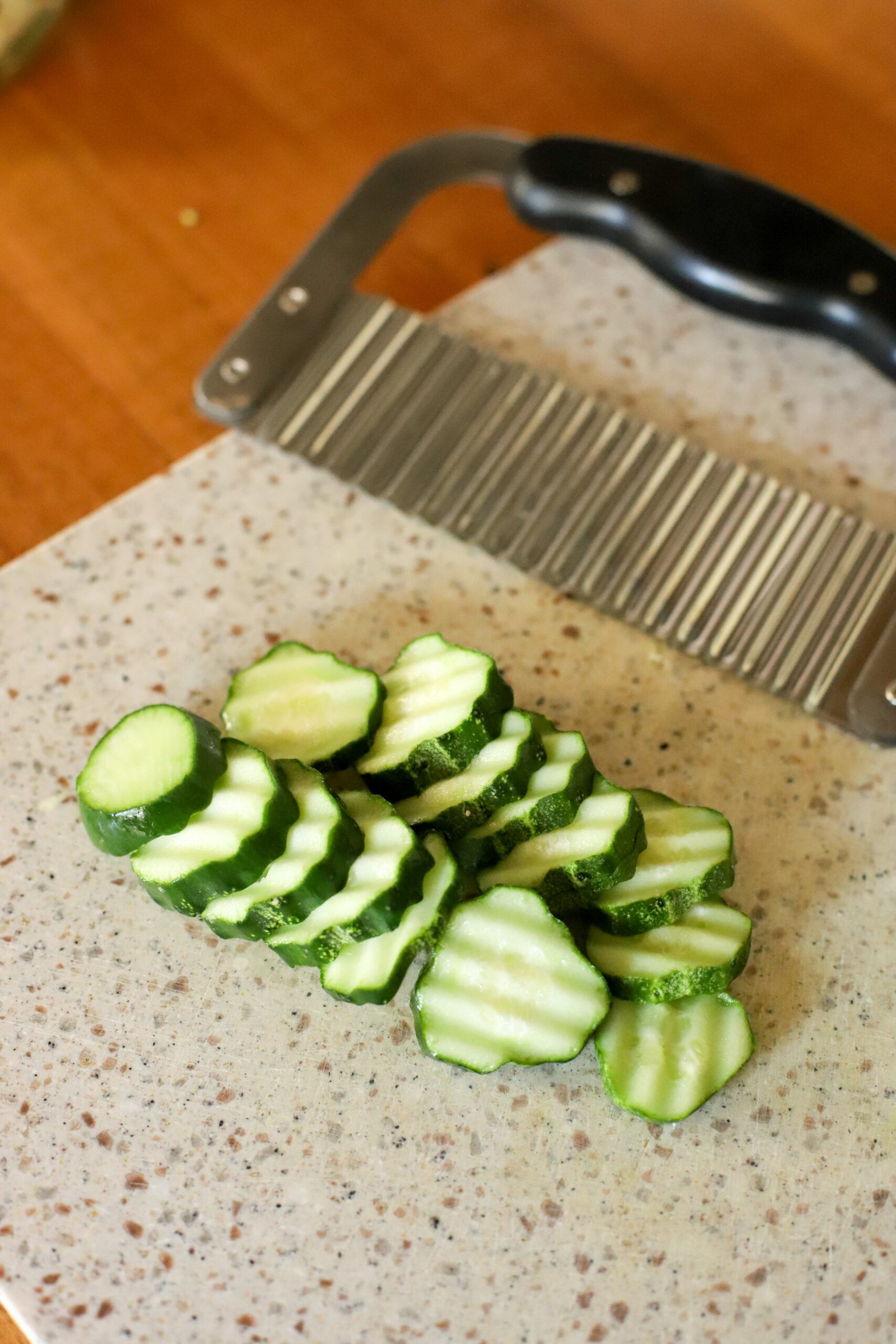
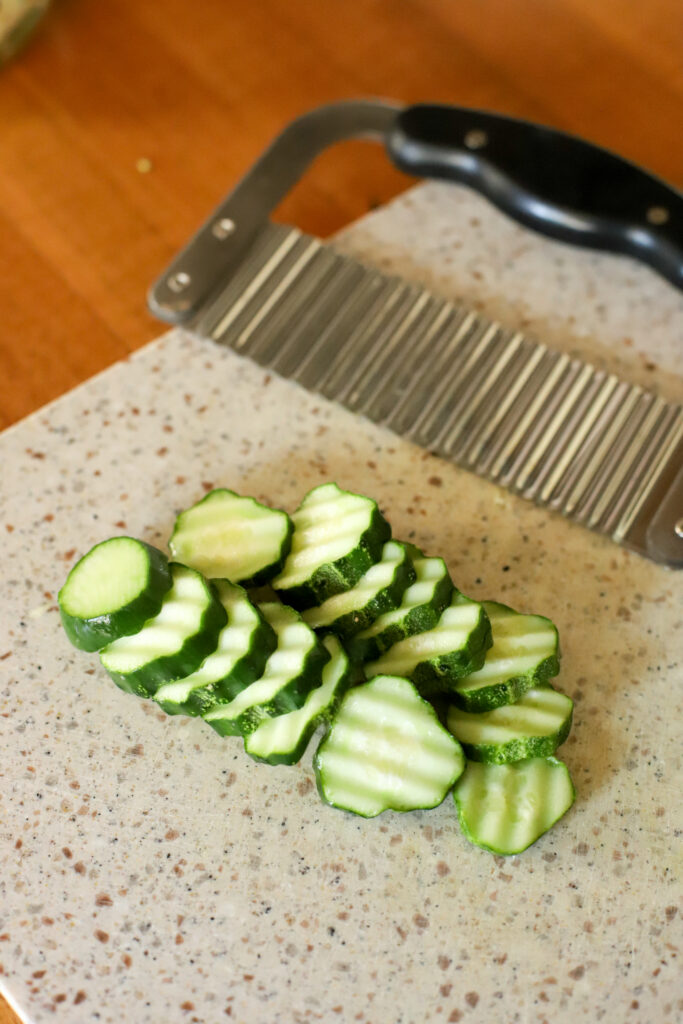
- Slice cucumbers in 1/4" rounds. I prefer crinkle cutting them. It makes for a very enjoyable pickle and may possibly affect the crunch factor in my opinion.
- Dice onions and cut garlic in half.
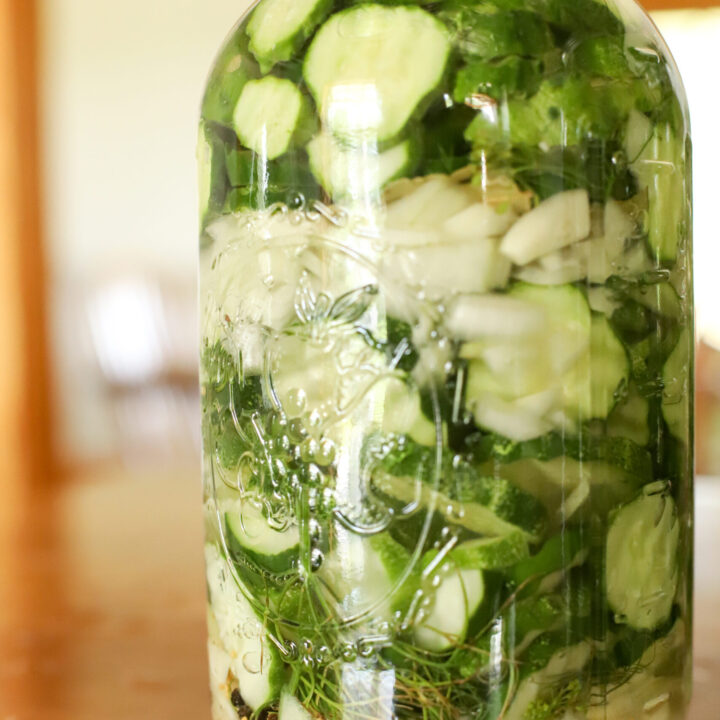
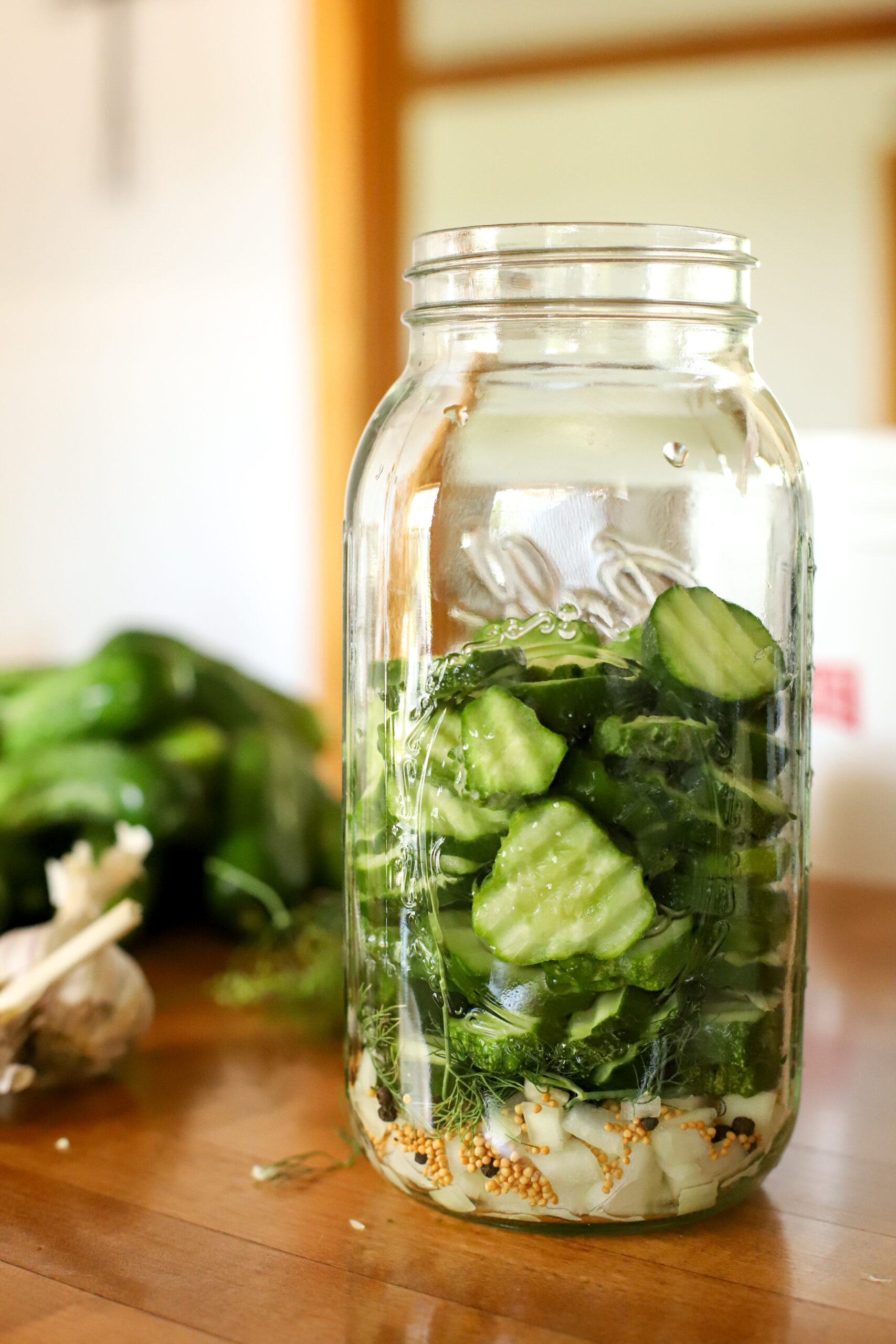
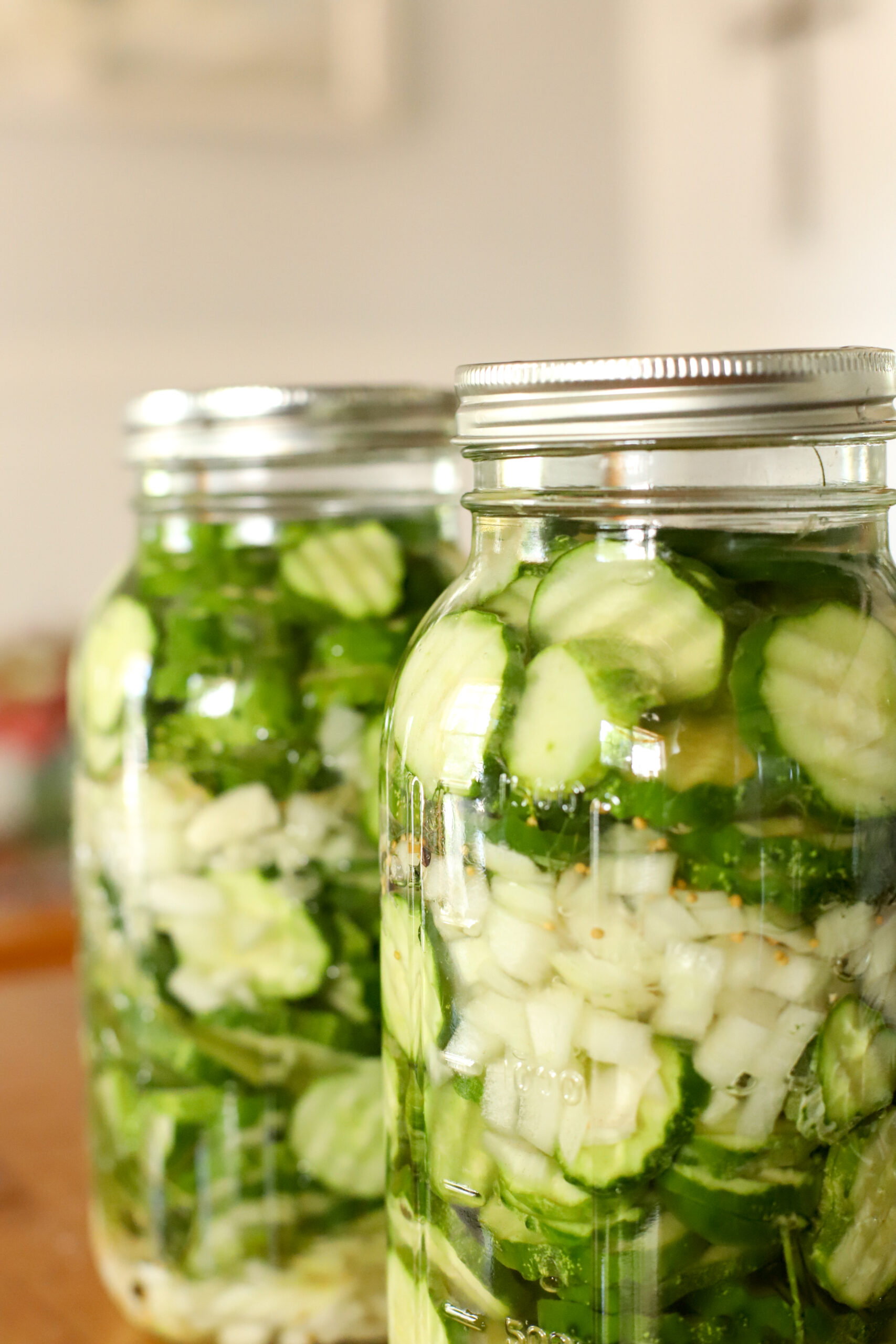
- In a half gallon mason jar, layer ingredients as follows: Onions, garlic, peppercorns, mustard seeds, bay leaves, fresh dill, cucumbers, onions, garlic, peppercorns, mustard seeds, bay leaves, fresh dill, cucumbers. Always end with cucumbers on top as this will aid in holding down ingredients. After each cucumber layer, gently press contents down.
- In another bowl or jar, stir salt into water until dissolved.
- Place weight on top of pickles and gently press down.
- Pour water over pickles.
- Place mason jar lid on top, just resting it on the top. Do not screw on lid. This allows the cucumber to naturally "burp" as it ferments.*
- Place jars on a baking sheet to catch any liquid that overflows.
- Let cucumbers ferment 7 days in a location with an even temperature, preferably between 65-72 degrees. I like to ferment mine on a shelf in the basement where it is always nice and cool.
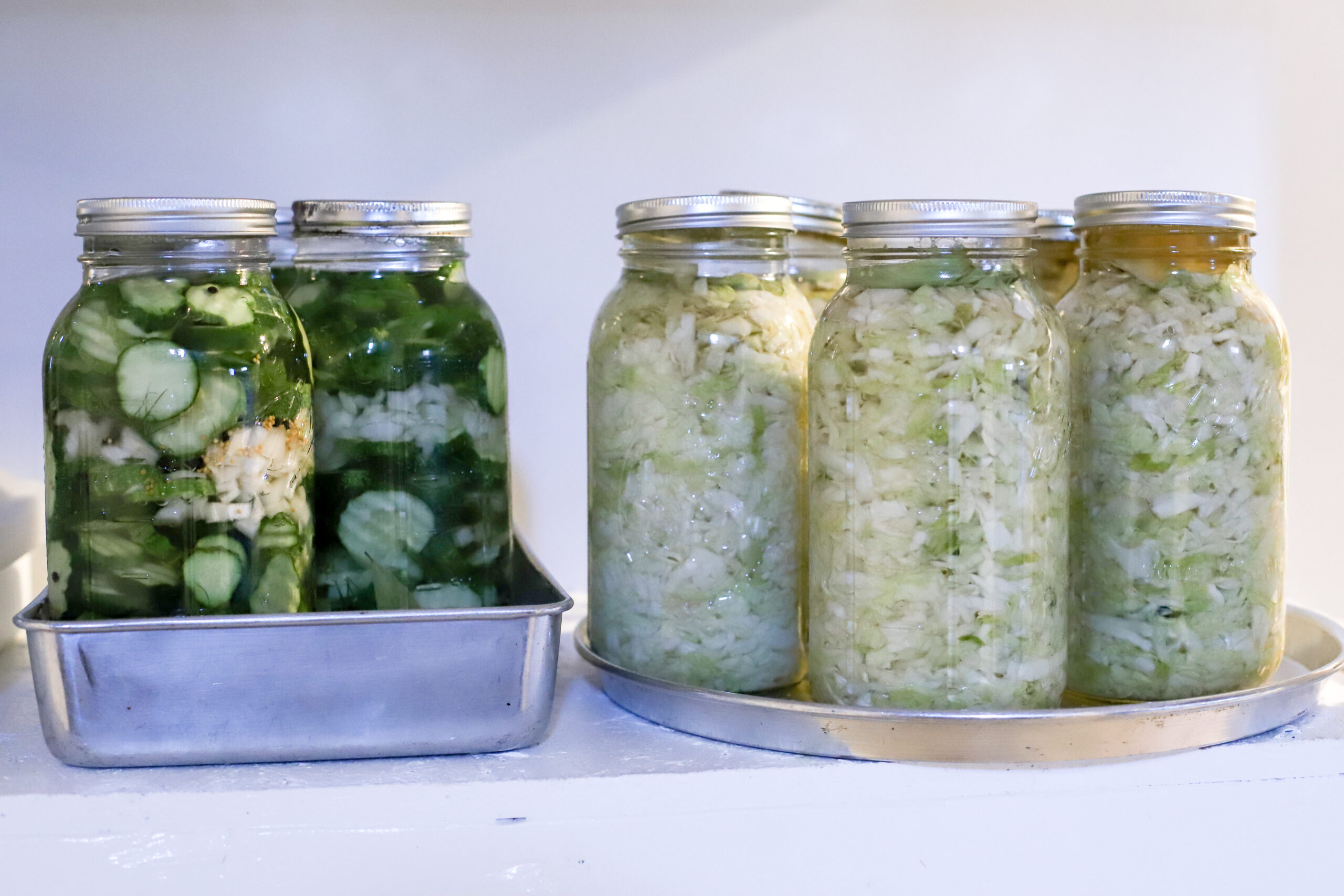
- After 7 days, remove weight from pickles and store in refrigerator for up to one year.
Notes
* I choose to not use fermentation lids such as an airlock or pickle pipe as I have found the ferment burps more naturally when simply placing a lid on top and letting it "burb" itself. It also saves you a lot of money in supplies especially when doing large batches of fermenting- I usually am doubling or tripling this recipe. I always remind myself that our ancestors didn't have fancy gadgets and gizmos. Fermenting is so simple and I prefer to keep it that way.
A Step-by-Step Guide On How To Make Crisp Fermented Cucumber Dill Pickles Every Time:
Maybe this is your first time ever stepping into the beautiful world of fermenting. WELCOME! I am so glad you are here. In this post I hope to SIMPLIFY the process of making fermented cucumber pickles down to easy skills you will understand and master. Making fermented cucumbers can seem daunting, especially when you want to achieve a crisp, flavor packed pickle. I hope to give you easy, actionable steps you can feel confident accomplishing and more importantly – ENJOY the benefits and flavors of fermenting cucumber pickles in your own kitchen.
In this post we will dive into 5 topics to equip you to make an amazing ferment the whole family loves:
- The beautiful world of microbes
- Sourcing cucumbers
- How to make crisp fermented cucumber pickles
- Simple ingredients with big impact
- Tips and troublshooting
Why do I love fermenting?
I cannot remember the first time I started fermenting. However, I think it was around the time my mom did some reading on the benefits of it. It was my job to figure out how the process worked and I know I tried everything from sauerkraut, to kefir, to celery, to carrots, to garlic, to cucumbers! Most of my ferments turned out soggy, moldy, or with wonky flavors. It wasn’t enjoyable. The fermentation world is vast but I had little success with actually loving how my ferments turned out UNTIL I realized the beauty of how a ferment works and the simple processes to make it fool proof. It took time to learn.
Maybe this sounds like you? I’m confident that with time under your belt you will learn these simple skills as well!

Join us for coffee on the porch!
Join us on the porch for our Substack newsletter and get our newest recipes straight to your inbox. This is a biweekly email for women, wives, and mothers who desire to cultivate homemaking skills, nurture healthy families through homegrown and homemade food, and grow in grace & godliness in the places God has us.
The wonder of microbes…
Microbial life is literally everywhere. In a single teaspoon of healthy soil there can contain more microbes than people on the earth. WHOA! In dirt, these microbes communicate with plants to get the plants what they need. One microbe can travel several feet from the plant to get the plant the nutrients that it needs.
The same signal system happens in our own guts. Scientists do not fully understand all of these processes yet however they have discovered that microbes in the gut not only break down food so that the body can utilize it but they also create b and k vitamins that can be easily absorbed by the body. And we haven’t even begun to talk about the role microbes play in our mouths, skin, ears, noses…the list goes on!!
Microbes have specific, unique, and necessary functions on and in literally every living thing. Without them, the world would be sick, in pain, unable to function, and dead.
We can already see the affects of losing microbes in our soil through chemicals and loss of organic matter and we can see the affects in our own bodies caused by medication and antibiotics. Everywhere you look- soil, animals, and people are all being affected by the loss of these beautiful God created organisms in our lives.
So what can we do to steward this amazing microbial life and replace these necessary helpers that have been lost? One of the easiest first steps, that’s also delicious, is through making your own fermented cucumber pickles!
Fermented cucumbers under the microscope…
Fermented cucumber pickles are made possible through a process called lactic acid fermentation. During this process, microbes found on the surface of the cucumbers (most often Lactobacillus) convert the sugar of the cucumbers into lactic acid as it sits in a high salt and oxygen free environment. This lactic acid gives the pickles its distinctive sour taste we all know and love.
The benefits for us from this process are amazing! Utilizing the fermentation process not only increases the flavor of the vegetables but also increases the body’s ability to absorb the nutrients found in the vegetables. Let the microbes do the hard work for you.
Sourcing cucumbers for CRISP fermented cucumber dill pickles-
I’m sure by now you will realize the importance of how food is grown. While I would LOVE if everyone had a backyard full of garden goodness, I realize that there are certain situations and seasons where this is not possible.
Grow cucumbers yourself!
My first recommendation when sourcing organic cucumbers is to grow it yourself. It’s one of the easiest seeds you put in the ground in the spring. By mid summer you will have fresh cucumber grown right in your own (hopefully) microbial rich soil. You will want to choose a variety that is perfect for pickles. This is one way to ensure crisp pickles every time. My favorite variety so far is the Cool Customer Cucumber from High Mowing Seeds which you can find here.
Raid your friend’s garden!
My second recommendation would be to find them grown by a friend or neighbor. Maybe your church is overflowing with shared produce this year? Most people plant way more cucumbers then they realized they needed. Ask around, you may gain a new friend in the process!
Find them at a farmers market!
In most areas, farmers markets can abound with fresh produce during the mid summer months. Don’t be afraid to ask if they would give you a better price if you purchased in bulk.
Farmers markets in my area tend to be a little less farmer and a lot more market so finding fresh produce in my area can be hard unless I grow it myself or get it from a friend. If this is the case for you, the top two options may be a better fit.
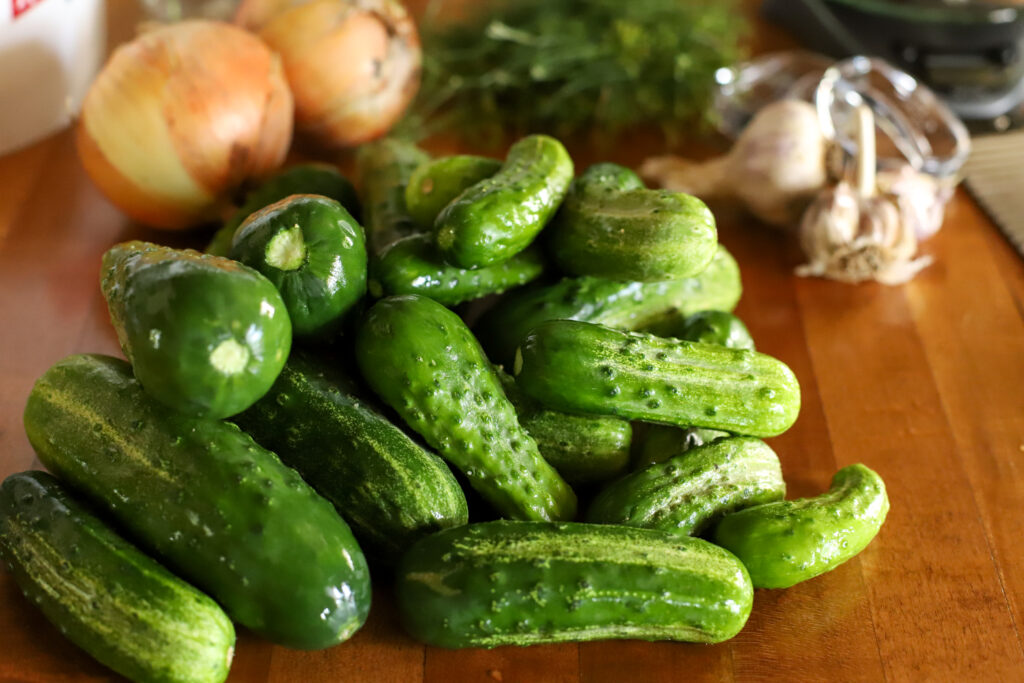
How to make Crisp Fermented Cucumber Dill Pickles- anyone can do it!
It’s true, anyone can make CRISP fermented cucumbers. I know you may find yourself intimidated by the steps. Maybe you think it’s strange to leave unrefrigerated food on the counter for days. And maybe you just can’t get over how you ruined fermented food in the past.
Well I’m here to bring your confidence back! Don’t overcomplicate it. You are simply bringing ingredients together in a specific way to allow the microbes to do the job they were meant to do. Do your part and they will do theirs. It’s a beautiful team effort that will lead to delicious results!
Remember, generations before us have been making fermented vegetables with far less gadgets and gizmos to help aid them than we have now. While we have more refined and specific instructions now, this is a natural and God given process that literally anyone can do.
Step-by-Step Instructions
How to make crisp fermented cucumber dill pickles taste delicious:
I am a very simple girl. When I run across recipes that tend to have a lot of ingredients I get paralyzed. I can’t make them because I don’t have those ingredients on hand nor do I intend to ever have those ingredients on hand. That’s why this recipe calls for just a few simple, homegrown flavors that are always either growing in my garden or stored in my kitchen.
- Fresh Dill. Such an easy herb to grow that tends to also reseed itself for the next year. In dill pickles, dill needs to be the star of the show and fresh dill works perfect for that.
- Onion. It’s a background flavor that pulls it all together. Plus you get the added bonus of adding fermented onion on top of those summertime grilled burgers.
- Garlic. Perhaps just as much a star of the show as the dill, it just pairs so perfectly in these pickles. Garlic has so many benefits as well, especially when fermented. Fermentation increases the antioxidants and can also aid in digestion. It’s always a gem when you find a garlic half in the jar.
- Black Peppercorns. While I don’t add too many, the peppercorns add to these pickles that classic dill pickle flavor we all love.
My dad and brother LOVE these so much! They eat it so fast I can hardly keep up a stash. We enjoy them on sandwiches and grilled burgers and sometimes we just grab a few for a snack!
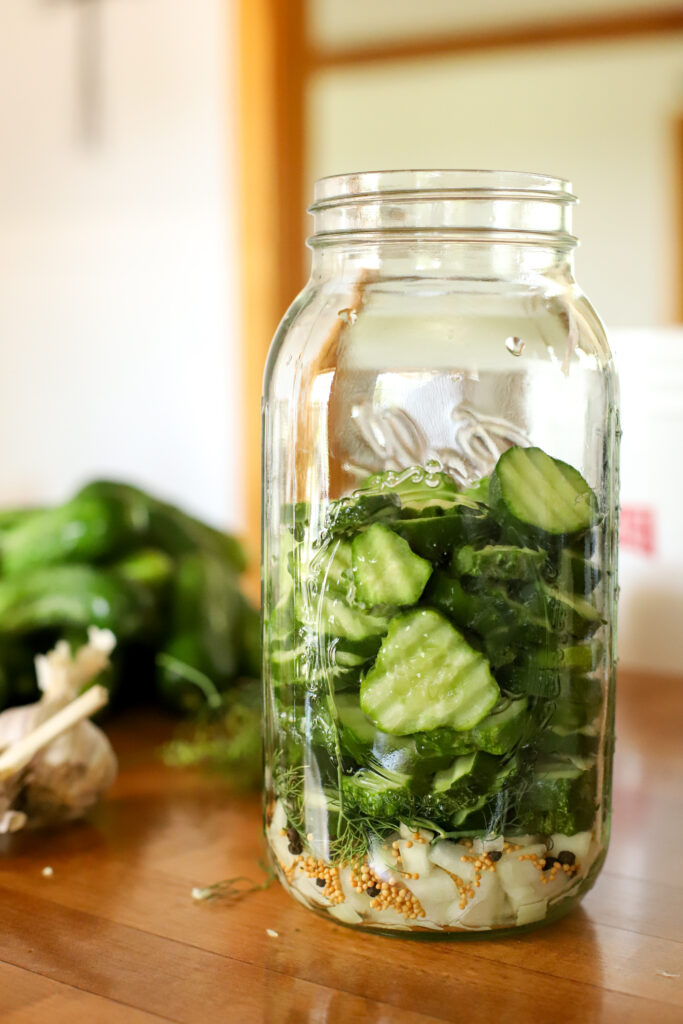
What is the secret to a crisp fermented cucumber dill pickles every time…
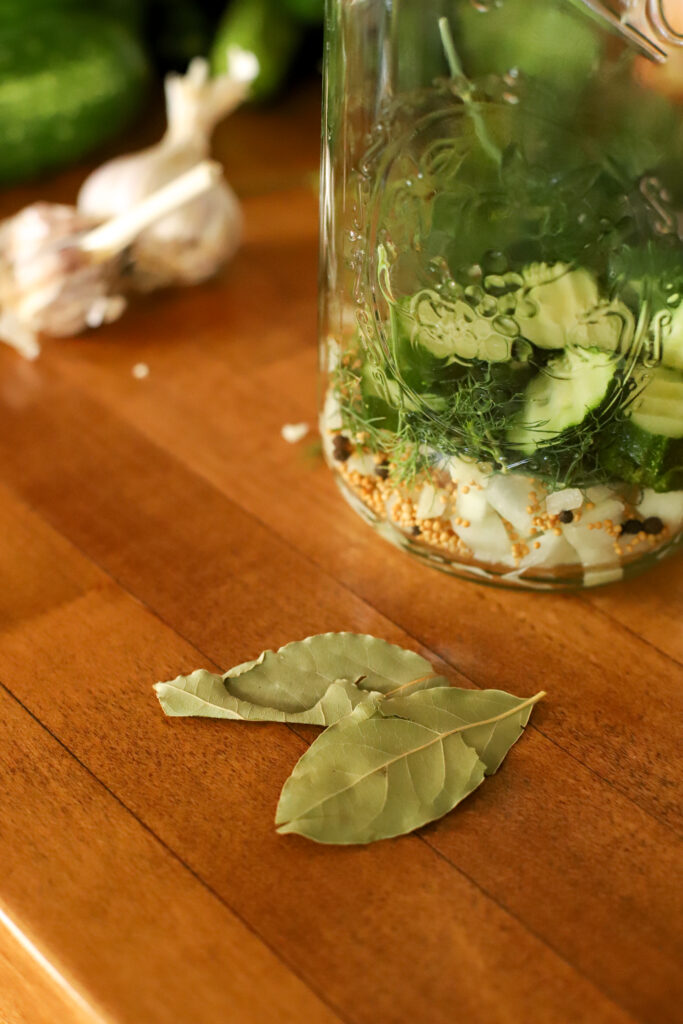
BAY LEAVES
Bay leaves contain tannins that inhibit the breakdown of cell walls, which is why fermented cucumbers stay crisp in this recipe instead of softening over time. Bay leaves can also contribute a mild aromatic flavor.
Quality Salt
Choosing the right salt is key to fermenting. We want unrefined and non-iodized for a really great ferment. I choose to use Redmond’s Real Salt. I have had many successful ferments with it. It also has great flavor and a lot of minerals. It has been my experience in the past that when utilizing other salts it could change the flavor of the final ferment. Use the salt you have and if it doesn’t work or the flavor could be better, consider changing it to a better salt than you had before. Good minerals=happy microbes!
Cut the ends off of the cucumber
Failure to remove both the blossom end and the stem end of the cucumber can lead to soggy and bitter pickles due to the substance called cucurbitacin that is released. Cut them off and feed them to the chickens, you’ll thank me later.
Use half gallon jars
One of the biggest pieces of advice I can offer you when making fermented cucumbers is to make them in half gallon jars. Fermentation vessel size matters. This changed everything for me. I used to make small batches in quart mason jars. It was a struggle to get all the ratios of ingredients right and it often fermented too fast. It may seem like a large batch to use 1/2 gallon mason jars, but it is so worth it in the end. Believe me – a 1/2 gallon jar goes fast!
Crinkle cut those cukes!
While crinkle cutting cukes may not scientifically make fermented cucumbers more crisp, in my opinion it definitely causes more enjoyment when eating them! Feel free to slice, spear, or crinkle cut! I know they will be delicious either way!
How long should I ferment my cucumber dill pickles?
Seven days is all that is needed to produce a quality and crisp fermented cucumber dill pickle. This is just enough time to allow the microbial action to take place as well as to let the flavors infuse. Any longer, and the ferment may be more sour than would be enjoyable.
Do I need to use an airlock or pickle pipe when fermenting my cucumbers?
No, there is no need to purchase airlocks or pickle pipes to ferment your cucumbers. In the beginning of my fermenting journey I purchased a fermentation kit. Over time, as I experimented and researched, I realized that people have been fermenting vegetables for thousands of years. They did not have man made products to assist them. They simply had a large pot or bowl, salt, water to cover their ingredients, and a large weight to keep it submerged. They knew the right environment to ferment and they produced high quality ferments without gadgets and gizmos.
Simply place the lid and ring of the mason jar on top of the jar without screwing it on. This keeps the ferment covered yet also allows it to burb itself as the gasses build in the ferment. Believe me, it knows what to do. This is why I suggest placing a baking pan under the jars. At the end of seven days you will see liquid that has overflowed as it has burped itself.
In the long run, this will save you money on unnecessary supplies and will allow you to freely ferment as many jars as you would like without being restrained to only as many jars as you have airlocks for.
I hope this simplifies your fermenting.
Troubleshooting
What about mold in my fermented cucumbers?
Mold rarely happens and if it does it is truly no big deal as long as the mold is only present at the very top. You will be fermenting cucumbers for only seven days therefore it should not be an issue. If you do see mold it is most likely caused by the cucumbers or onions not being submerged under the liquid. As long as the mold is only on the surface, simply scoop out the mold and throw it out. If the mold permeates the whole jar, you may want to make a judgement call and throw it away. Think of it like a bad apple. Sometimes you can cut out the mushy or wormy parts of the apple and use the rest, other times the apple is too far gone. It’s as simple as that.
Why are my pickles soggy?
Soggy pickles are caused by a substance called cucurbitacin that is released from the blossom end of the cucumber. Cut off both ends of the cucumber and discard before making fermented cucumbers to ensure you pickles stay crisp!
Happy Fermenting!
I hope this guide gave you the tools you needed to grow your knowledge and build the skills needed to have a successful batch of crisp fermented cucumber dill pickles!
Want to try your hand at fermenting something else? Try our recipe for Homemade Sauerkraut!
Comment below if you’ve made these fermented cucumbers! We would love to hear.