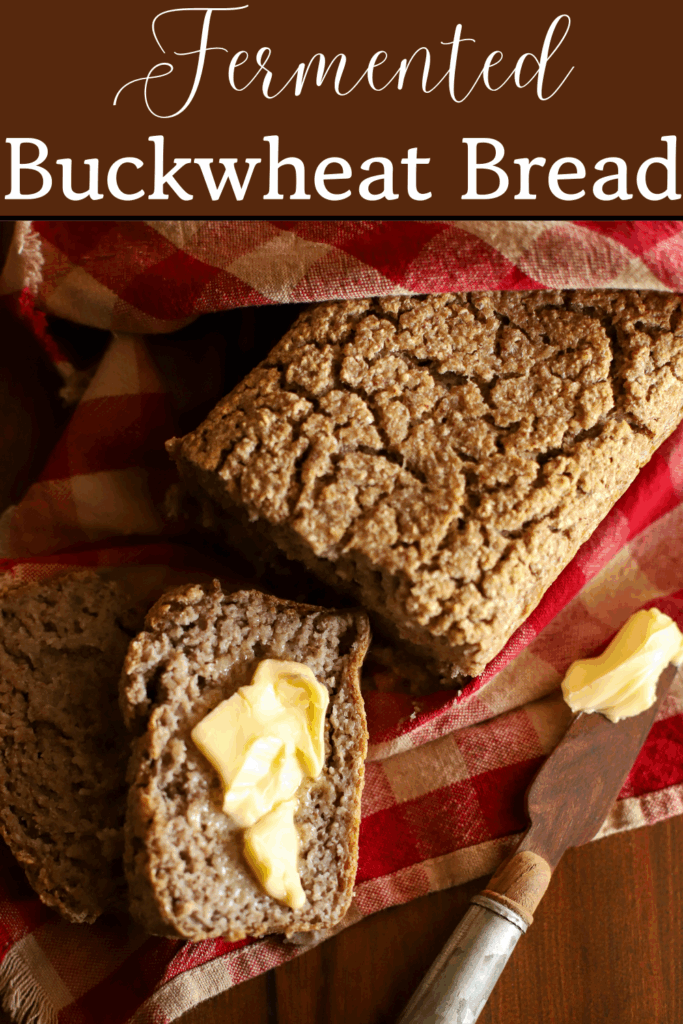
Fermented Buckwheat Bread
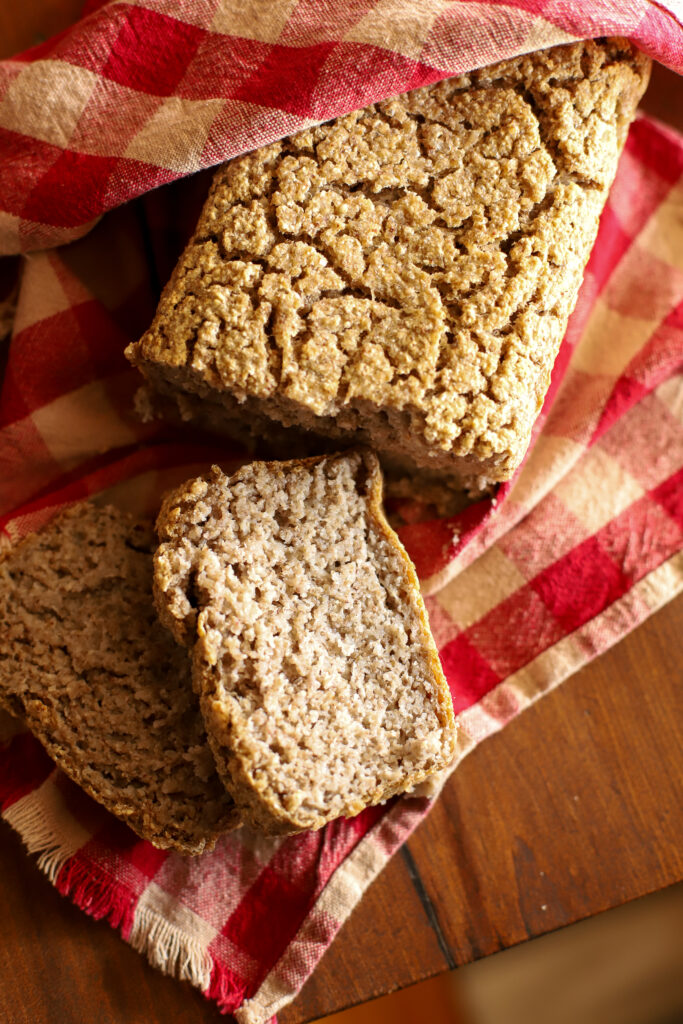
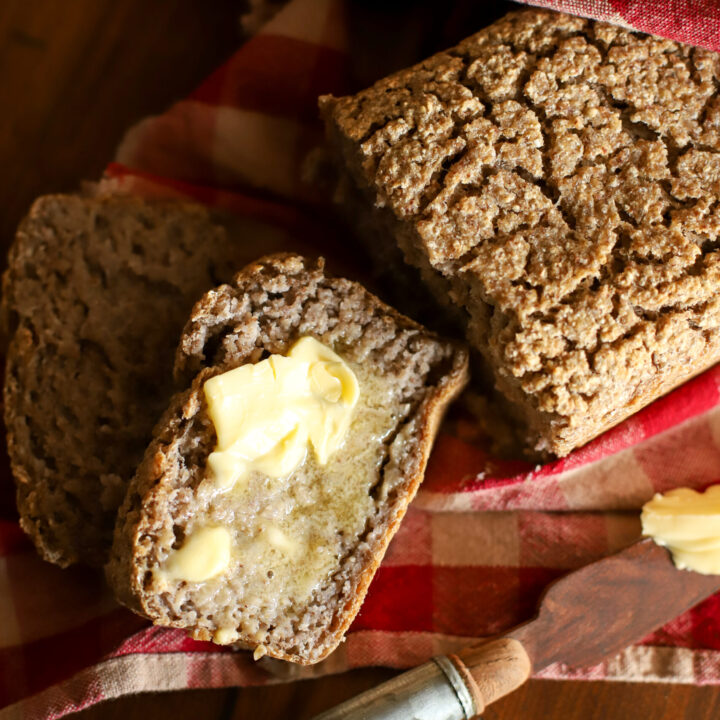
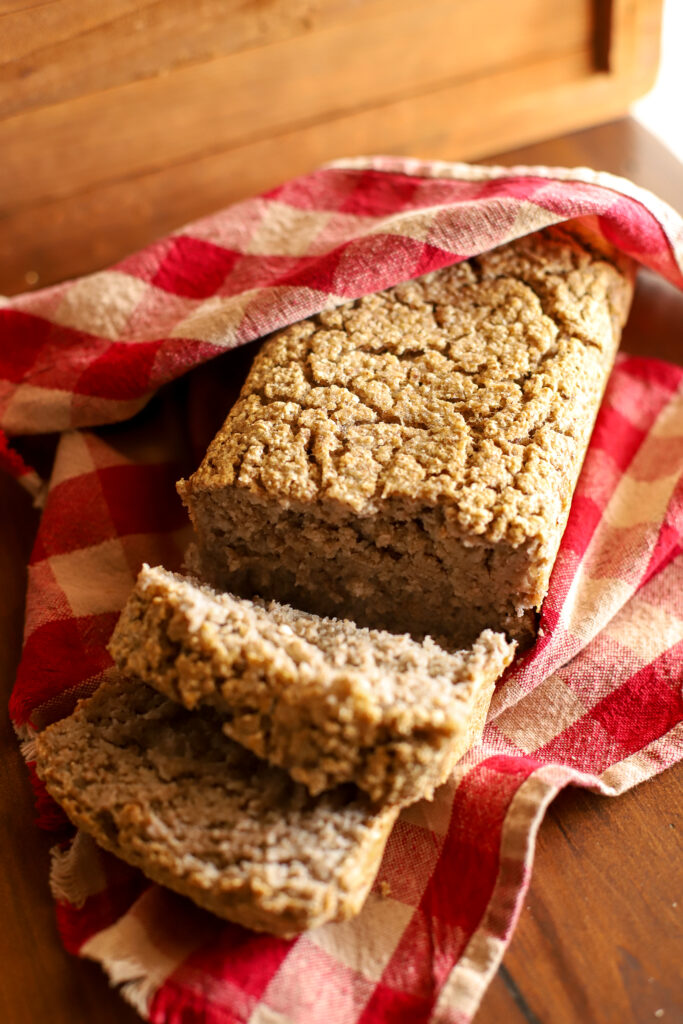
Looking for a fermented bread that’s gluten free and still cozy and crusty? Fermented Buckwheat Bread is definitely worth a try! It’s crusty exterior and fluffy interior make it amazing when toasted and slathered with butter! I love that it makes a great sourdough bread alternative while still incorporating the beautiful practice of fermentation.
Fermented Buckwheat Bread
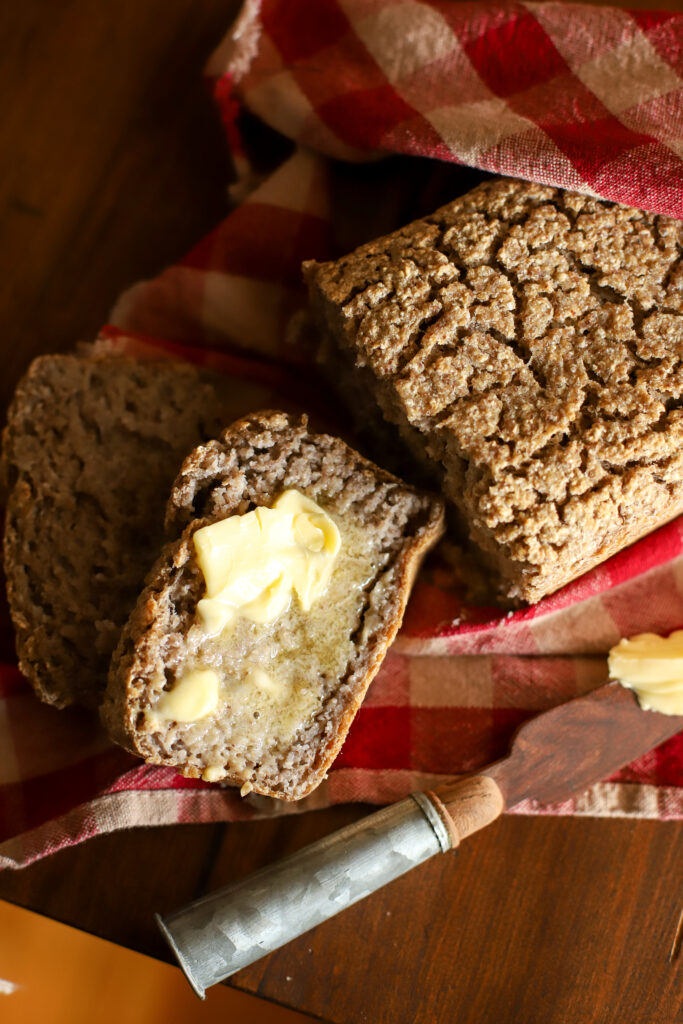
Fermented Buckwheat Bread's crusty exterior and fluffy interior make it amazing when toasted and slathered with butter! I love that its makes a great sourdough bread alternative while still incorporating the beautiful practice of fermentation.
Ingredients
- 5 Cups Raw Hulled Buckwheat Groats
- Water to cover groats
- 1 1/2 Cups Water
- 2 tsp Salt
Instructions
- NOTE: This recipe takes time to prep. Groats need to soak for 6 hours and then ferment for 24 hours before baking so plan ahead. Here's an optional schedule for how I make the bread- 9AM Rinse/soak groats, 3PM Drain/blend groats, ferment until 3PM following day (24 hours), and bake.
- Begin by rinsing groats in a large strainer or colander using filtered water. After rinsing, pour groats into a large bowl and cover groats completely with filtered water. I like to cover mine with about an inch of extra water covering them. They will soak up the liquid, so keep an eye on them throughout the day if possible. Set aside on the counter for 6 hours. I keep the bowl uncovered at this time.
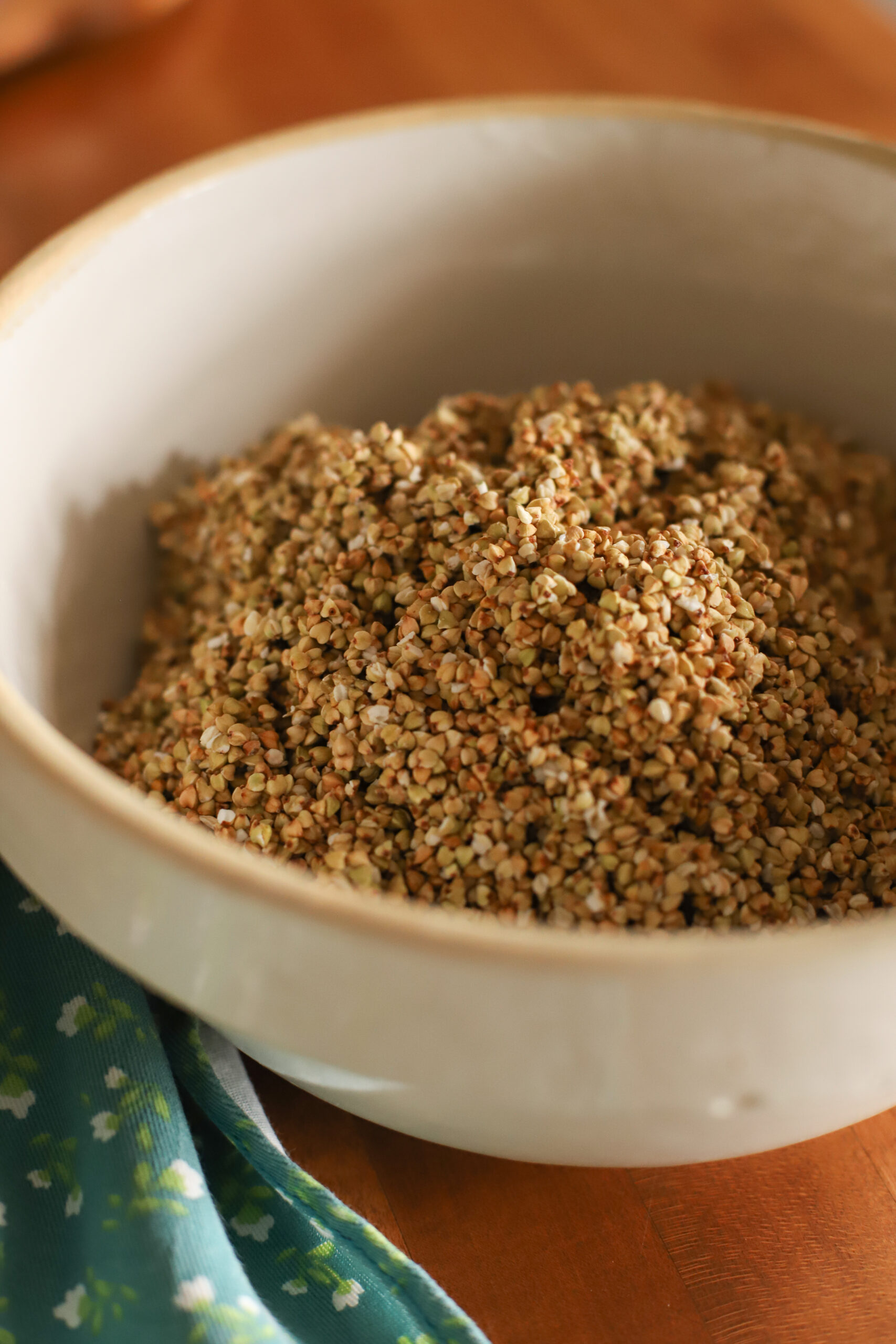
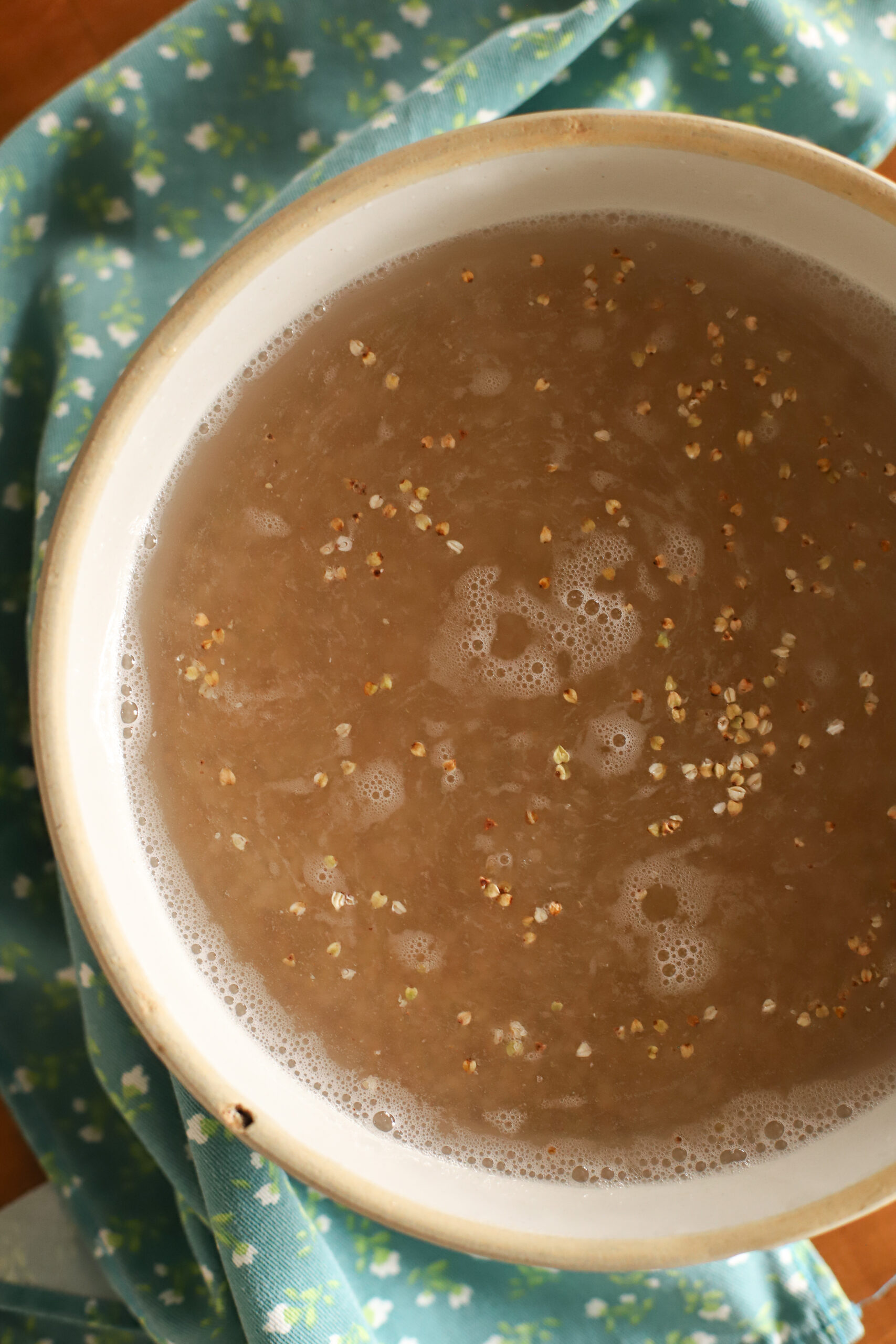
- After 6 hours, strain off all excess water using a large strainer or colander and place groats back into the bowl. Add salt and 1 1/2 cups filtered water. Blend using an immersion blender until smooth. If you do not have an immersion blender, something like a Vitamix or high quality blender would work.

- Once groats are blended you will now start the fermenting process. Cover blended groats and place them in a warm area in your house for 24 hours. I usually let them sit on my counter until the next morning or I put them in the oven with the light on for the remainder of the fermenting process. It all depends on the season of the year and how warm the house is.
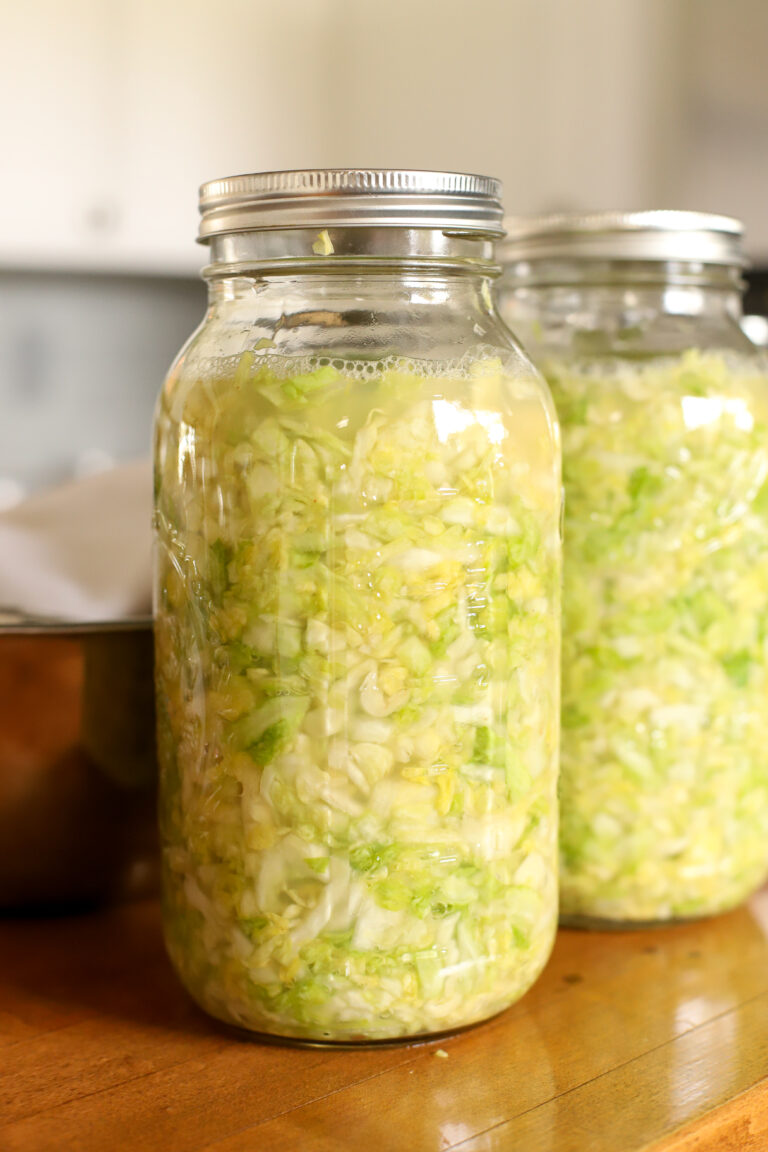
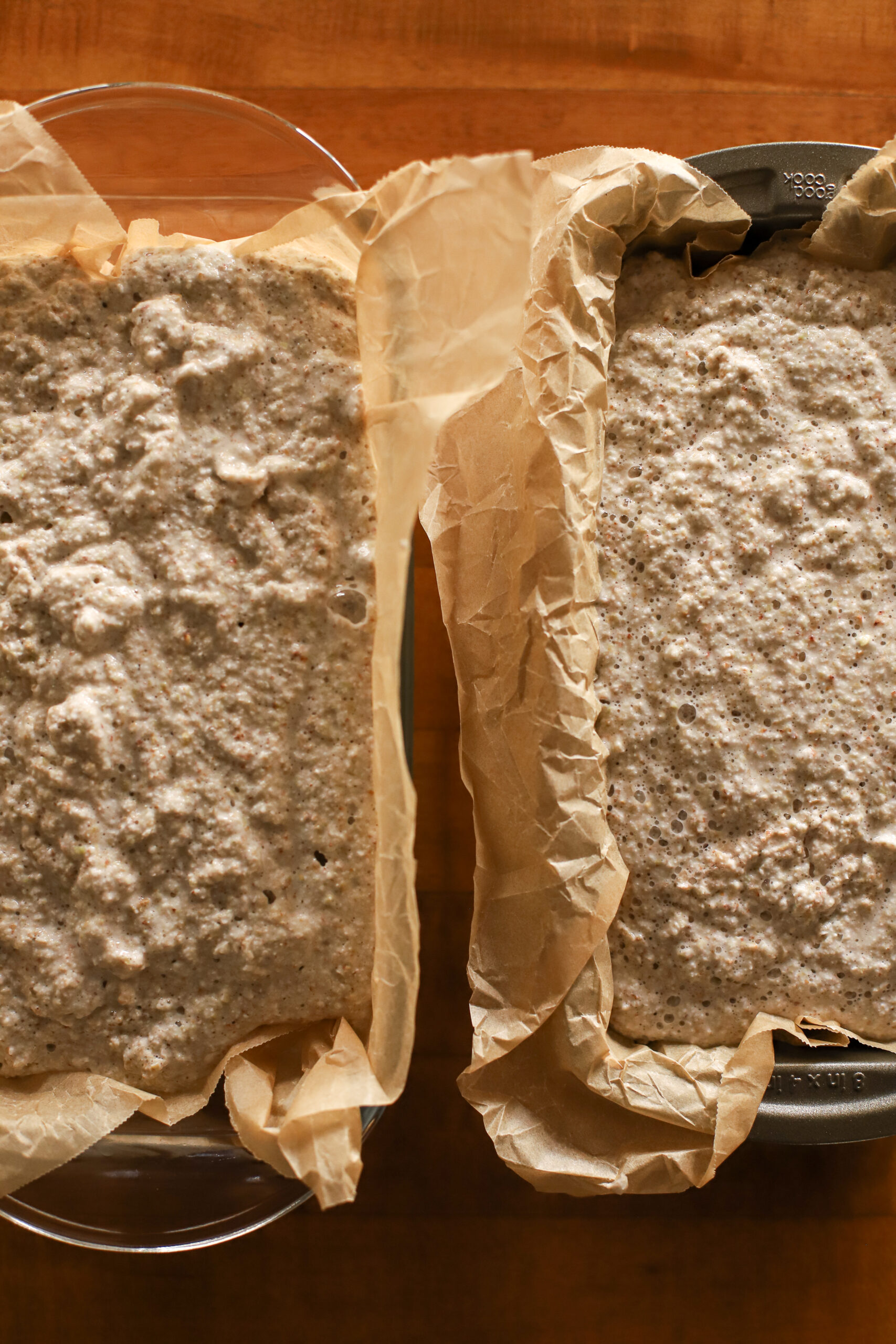
- After 24 hours, your groats should be nice and bubbly and will have expanded in size. This is great!!
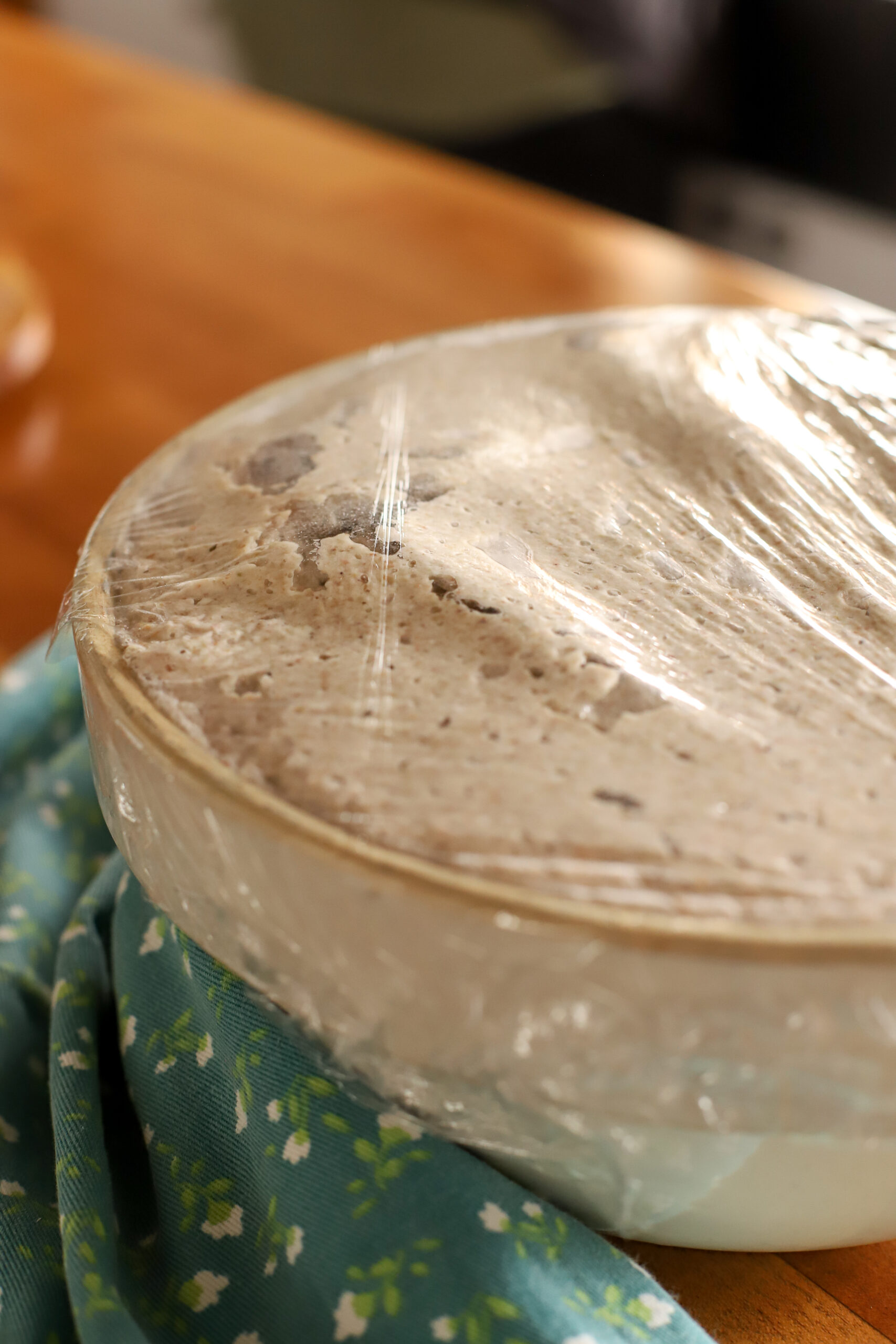
- Preheat oven to 350 degrees and line two bread pans with parchment paper. Evenly divide the fermented groats between the two pans.
- Bake at 350 degrees for 90 minutes. Yes you read that right. The top will be golden brown and crusty when done.
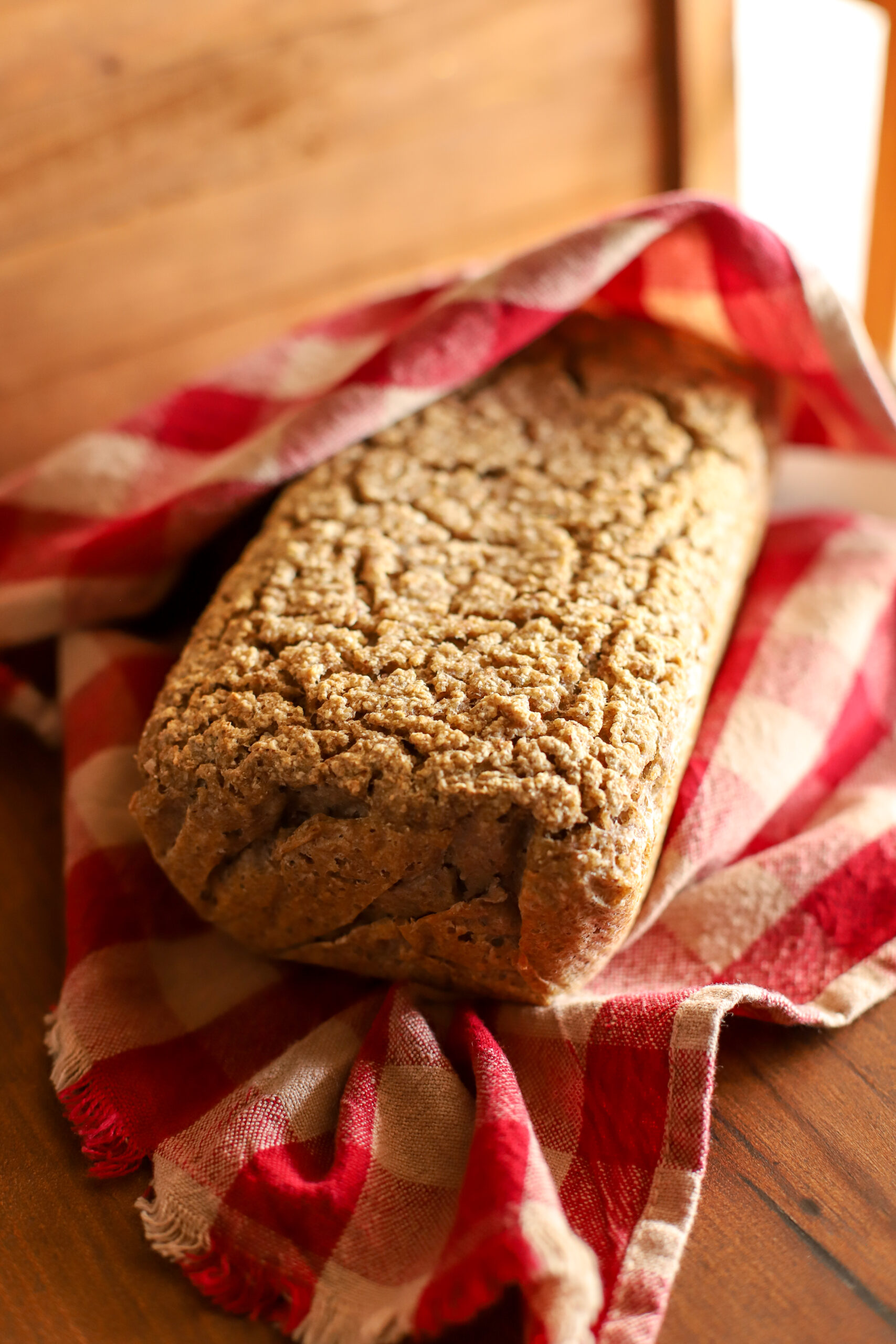
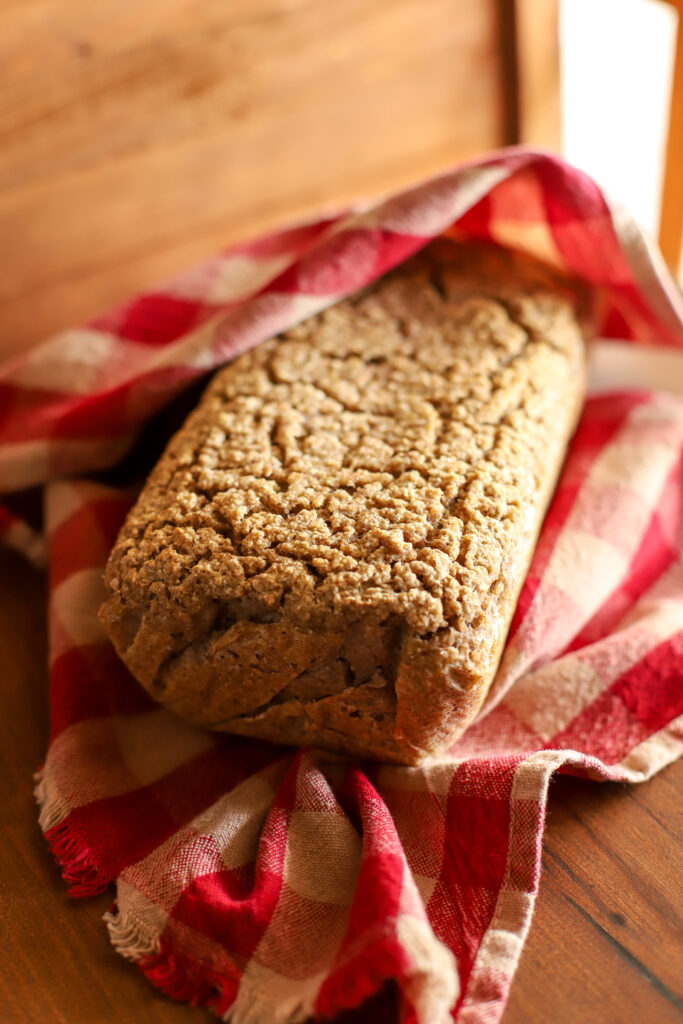
- Remove from the oven. Transfer to a wire rack and let cool completely before slicing.
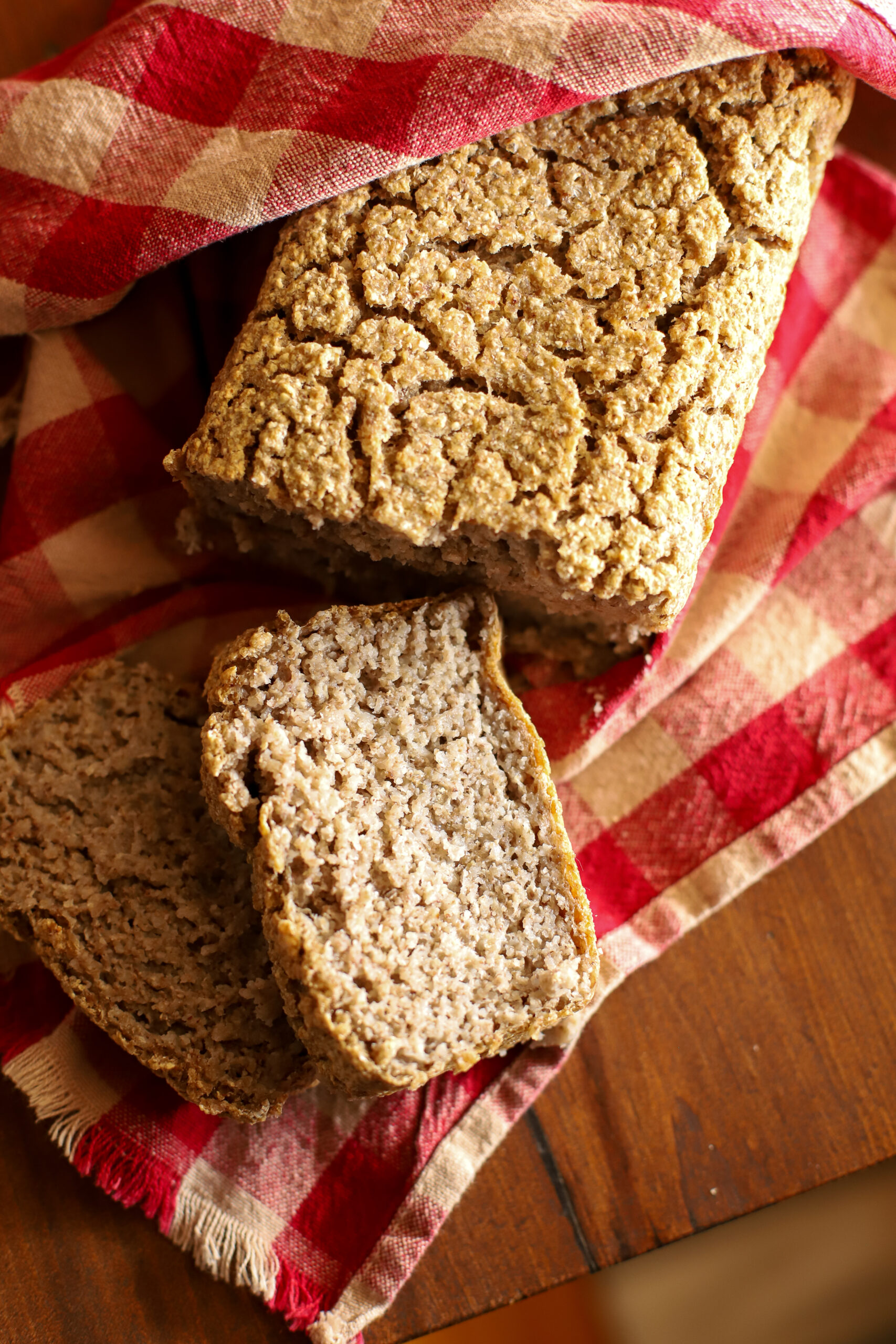
- After the first day, this bread tends to get a little chewy. If you like that, great. However, I prefer to slice both loaves and store them in a freezer bag in the freezer. Each time I want a piece of bread, I simply separate with a butter knife and toast.
Notes
What is Buckwheat?
Fermented buckwheat bread is not like regular bread at all. In fact, buckwheat isn’t wheat or grain. This is exactly why I was so drawn to it! Buckwheat is a super nutritious seed that can be soaked or milled. In the case of this bread, the seeds are soaked.
Buckwheat is considered an ancient grain (pseudograin that is) and is loaded with nutrition including minerals like magnesium and iron, high in antioxidants, and loaded with B vitamins!
What is Fermented Buckwheat Bread?
Many of you have probably never heard of this bread let alone eaten much buckwheat in your lives. I know I never had before I discovered this delicious recipe!
This bread takes raw, hulled buckwheat groats that are soaked for 6 hours. After they have soaked, groats are blended with water and salt and left to ferment for 24 hours. Then, the blended, fermented groats are baked in a loaf pan and you are left with a crusty bread that’s absolutely outstanding slathered in butter.
Everyone needs a bit of crusty bread goodness in their lives…

Join us for coffee on the porch!
Join us on the porch for our Substack newsletter and get our newest recipes straight to your inbox. This is a biweekly email for women, wives, and mothers who desire to cultivate homemaking skills, nurture healthy families through homegrown and homemade food, and grow in grace & godliness in the places God has us.
The first time I heard about fermenting buckwheat was on an ancestral health podcast. I immediately perked up my ears to hear more about this process. What?! Crusty bread in my future! I had to learn more. Buckwheat is not a grain, yet it can be used like one and fermented to create a bread like loaf full of nutritious and microbial goodness. It is allergy friendly for most people who are otherwise unable to eat regular types of bread. My day was made when I learned that there was buckwheat bread already being made on the market called Pacha Bread. So we tried it and we were HOOKED! The problem however was the cost. Almost $12 for a fairly small loaf. This was not going to fit into my budget so I had to make it myself.
What does fermented buckwheat bread feel and taste like?
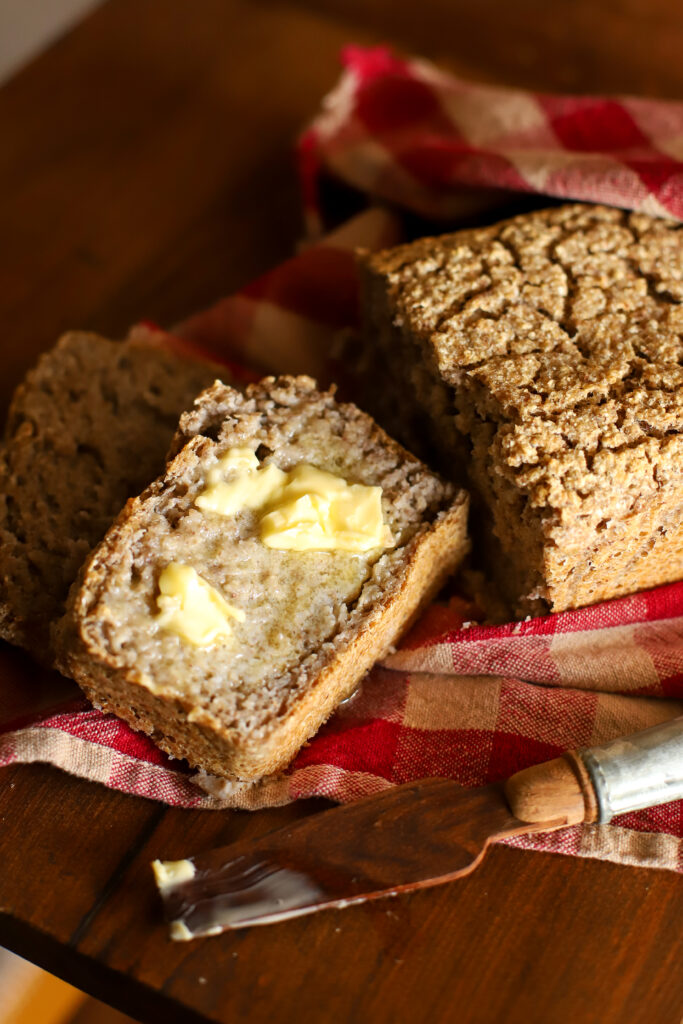
Fermented Buckwheat bread is quite dense yet is does have a certain fluff to it. The outside is crusty like a good artisan sourdough loaf perfect when paired with a bowl of soup. It holds up well loaded with avocado. While I wouldn’t suggest making a sandwich with this bread, I do love making open faced BLT’s or egg and sausage open faced sandwiches for breakfast. And of course this bread is amazing toasted for breakfast loaded with butter and jam!
It has a salty bland taste much like regular bread. Every once in a while you taste a sour note from the fermenting process.
Why you might enjoy this fermented buckwheat bread….
This bread has quickly become a freezer staple in our house. Since it’s all sliced up before putting into the freezer you can simply pull out a slice and pop it in the toaster to add to a meal or for a quick snack. If you’re looking for a crusty bread alternative I know you will definitely enjoy this one! This bread is satisfying for bread lovers who aren’t able to satisfy their bread cravings due to intolerances or allergies.
It’s fermented!
Sourdough is all the rage right now, but fermentation has existed long before any of us googled a sourdough recipe. What makes fermented buckwheat bread special is that it can utilize the process of soaking and fermentation to aid in the nutritional value of the bread. When anything is fermented it is almost, in a sense, predigested through the microbial enzymes breaking it down. When it lands in your gut, it is easy for your body to absorb the nutrients. This is why I love anything fermented!
It’s easy!
While most sourdough recipes take time and skill to accomplish successfully, this bread only requires a few easy steps and a little time. Let the bread do the work!
Simple ingredients!
When looking for a gluten free bread alternative it is easy to get overwhelmed with the amount of ingredients to have on hand. This bread recipe contains only 3 ingredients that are super easy to keep stocked in your pantry!